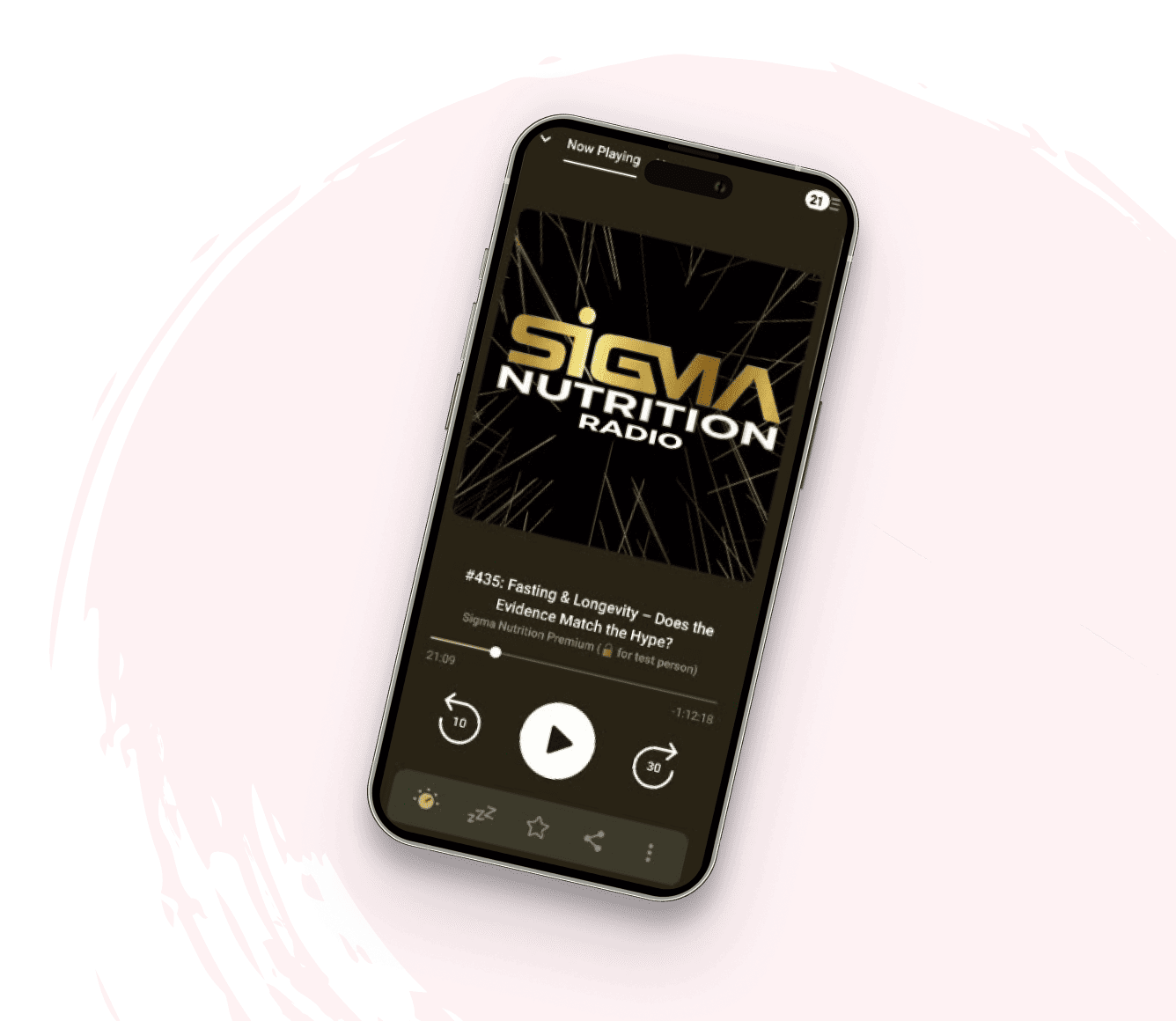
Listen Here:
Click or simply search “Sigma Nutrition” on your podcast platform of choice.
Or listen directly on the Sigma website here.
Introduction
The concept of “learning how to learn” focuses on meta-learning, which involves improving one’s own learning strategies. Instead of just absorbing information, meta-learners refine the skills that make learning itself more effective.
Cognitive science supports various learning strategies by exploring how the brain processes information. Techniques such as spaced repetition, active recall, and interleaving can improve long-term retention and understanding.
Improving abilities in specialized areas, like reading and interpreting research, involves strategic approaches. Similarly, becoming more knowledgeable about nutrition requires staying updated with the latest research and critically evaluating findings to boost proficiency and confidence in the field.
In this podcast episode, Scott Young discusses these themes, offering insights from his work on learning optimization. He shares practical methods for improving learning efficiency, particularly in reading research and expanding knowledge in nutrition. Scott’s expertise provides a valuable framework for enhancing cognitive abilities and achieving more effective learning outcomes.
Related resources
- Join the Sigma newsletter for free
- Subscribe to Sigma Nutrition Premium
- Scott Young’s Website
- Related Episodes:
- [02:13]Introduction to Topic
- [04:41]Conversation with Scott Young Begins
- [06:56]Insights on Learning and Cognitive Science
- [12:42]Effective Learning Strategies
- [20:27]Overcoming Mental Barriers
- [31:14]Effective Teaching Strategies
- [35:14]The Importance of Feedback in Learning
- [38:52]Optimizing Your Learning Environment
- [44:29]Translating Complex Information for a General Audience
- [52:32]Key Ideas (Premium-Only)
Guest Information
Click through to your app of choice to listen and subscribe:

Recently, Young has delved deeper into the cognitive science literature to uncover evidence-based strategies for improving abilities in various domains.
Young’s writings focus on helping individuals become more efficient learners. He gained significant attention with his “MIT Challenge,” where he completed the coursework for a four-year computer science degree from MIT in just one year, using free online resources. This ambitious project showcased his ability to apply principles of meta-learning, such as deliberate practice, active recall, and spaced repetition, to achieve remarkable results in a short period.

Danny Lennon has a master’s degree (MSc.) in Nutritional Sciences from University College Cork, and he is the founder of Sigma Nutrition.
Danny is currently a member of the Advisory Board of the Sports Nutrition Association, the global regulatory body responsible for the standardisation of best practice in the sports nutrition profession.
Introduction to this Episode
The concept of “learning how to learn” focuses on meta-learning, which involves improving one’s own learning strategies. Instead of just absorbing information, meta-learners refine the skills that make learning itself more effective.
Cognitive science supports various learning strategies by exploring how the brain processes information. Techniques such as spaced repetition, active recall, and interleaving can improve long-term retention and understanding.
Improving abilities in specialized areas, like reading and interpreting research, involves strategic approaches. Similarly, becoming more knowledgeable about nutrition requires staying updated with the latest research and critically evaluating findings to boost proficiency and confidence in the field.
In this podcast episode, Scott Young discusses these themes, offering insights from his work on learning optimization. He shares practical methods for improving learning efficiency, particularly in reading research and expanding knowledge in nutrition. Scott’s expertise provides a valuable framework for enhancing cognitive abilities and achieving more effective learning outcomes.
Useful Terminology for this Episode
| Key Terms & Acronyms |
|